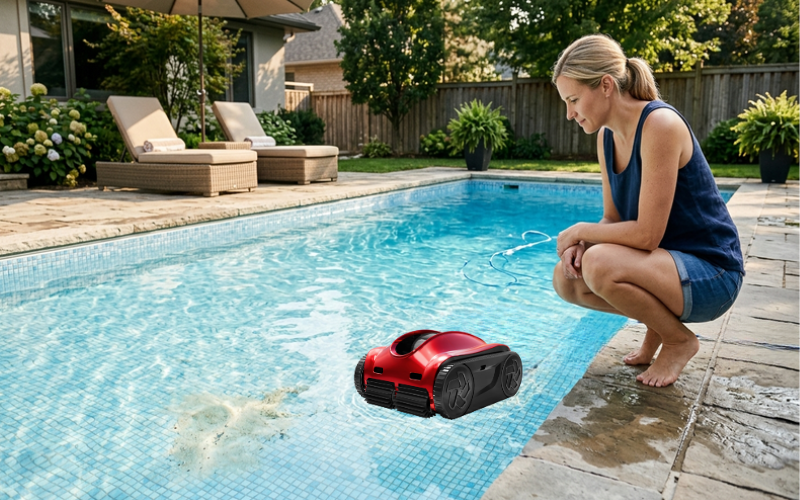
What Pool Owners Should Check When a Robotic Pool Cleaner Keeps Missing the Same Spot
A robotic pool cleaner can save a lot of time. It reduces manual work and helps keep the pool floor and walls in better shape through regular use. Still, even a good cleaning routine can become frustrating when one problem keeps repeating. The cleaner runs, the pool looks better, but the same area keeps getting missed over and over again.
This is a common complaint. It does not always mean something is broken. In many cases, the issue comes from pool layout, debris patterns, water movement, surface condition, or simple maintenance details. Pool owners often assume the cleaner should cover every area in exactly the same way on every cycle. In real use, coverage does not always look that perfect. Robotic cleaners are designed to clean efficiently, but certain spots can still become repeat trouble areas.
The good news is that this problem usually has a practical cause. Once owners check the right things, the pattern often becomes much easier to understand.
Start by Looking Closely at the Missed Spot
Before blaming the cleaner, it helps to study the area that keeps getting missed. Not all missed spots are the same. Some are corners. Some are tight areas near steps. Some are low-circulation zones where dirt settles again after the cleaner has already passed nearby.
Ask What Type of Area It Is
Look at the location and ask simple questions:
- Is it near a step or ledge?
- Is it close to a drain, ladder, or return?
- Is it in a sharp corner?
- Is it under a slope or curve?
- Is it a place where debris naturally gathers?
The answer matters because some spots are difficult by design. A cleaner may pass nearby without fully reaching into every tight angle or awkward transition.
Check What Kind of Debris Is Left Behind
The type of debris also matters. Fine dust behaves differently from leaves. Sand settles differently from pollen. A missed patch of fine dirt may not mean the cleaner ignored that spot. It may mean the debris returned there after the cycle.
Pool Shape and Features Can Affect Coverage
Many cleaning problems come from pool design rather than cleaner failure. Pools are not all simple rectangles. They may have curves, tanning ledges, benches, deep-end transitions, or unusual corners that change how a robotic cleaner moves.
Steps, Benches, and Tight Corners Are Common Trouble Areas
A robotic cleaner works best on broad, open surfaces. It may still perform well in complex pools, but some features are naturally harder to cover. Small benches, narrow wall transitions, and tight corners can interrupt movement patterns.
If the same missed area sits beside one of these features, the issue may be more about access than about cleaning power.
Deep-End Slopes Can Change Movement Paths
Some cleaners adjust naturally to slopes, but steep or uneven transitions can still affect pathing. If the missed area is close to a slope change, the cleaner may pass over the area differently than owners expect.
Water Movement Can Keep Pushing Debris Back
This is one of the most overlooked causes. Sometimes the cleaner is doing its job, but water movement pushes debris back into the same place after the cycle ends.
Returns and Circulation Patterns Matter
Pool returns can guide fine debris into repeat collection zones. If water flow keeps directing dirt toward one corner or one patch of floor, that area may look missed even after the cleaner has already worked nearby.
Watch the pool after the cleaner finishes. If light debris slowly drifts back to the same spot, the problem may be circulation, not coverage.
Wind and Yard Conditions Can Create Repeat Debris Zones
Outdoor conditions matter too. Wind may push pollen, leaves, or dust toward one side of the pool. Nearby trees or open landscaping may also make one section dirtier than the rest.
In that case, the missed spot is really a high-debris spot. That calls for a different expectation.
Check the Cleaner Itself for Basic Maintenance Issues
A robotic cleaner that is not maintained well may still run, but it may not clean at its best. Before assuming the problem is advanced, owners should start with the basics.
Inspect the Filter First
A dirty filter reduces performance quickly. When the filter fills up, water flow drops and pickup becomes weaker. This can make certain areas look under-cleaned, especially if the debris is fine and easy to disturb.
Check whether the filter:
- is clogged with fine dirt
- still contains debris from the previous cycle
- has buildup in corners or edges
- is installed correctly after cleaning
A simple filter rinse solves more problems than many owners expect.
Look at Brushes, Wheels, and Underside Contact
If brushes are worn or the underside has trapped debris, the cleaner may not move or scrub as effectively. This becomes more noticeable in areas that already demand better grip or better contact.
Routine inspection helps reveal small performance losses before they become obvious cleaning problems.
Consider Whether the Surface Is Part of the Problem
Pool surfaces affect how dirt settles and how easily it comes free. A missed area on smooth fiberglass may mean something different from a missed area on rough plaster.
Rougher Surfaces Hold Fine Debris More Firmly
If the trouble spot is on a rough or aging surface, fine dust or early residue may cling more strongly there. The cleaner may pass over the area but leave behind material that needs more brushing or repeated cleaning.
Surface Condition Can Vary Within the Same Pool
Not every section of a pool ages the same way. One area may have more wear, more texture, or more residue buildup than another. If the cleaner keeps missing the same spot, compare the feel and appearance of that section with the rest of the pool.
Think About Timing and Cleaning Frequency
Sometimes the problem is not where the cleaner goes. It is when the cleaner is being used.
Debris May Be Settling There After the Cycle
A pool can look clean right after a cycle and then show the same dirty patch later in the day. This is common with fine dust, pollen, or dirt from nearby landscaping. The missed area may really be a settling area.
In that case, a more frequent cleaning routine may help more than a longer single cycle.
Consistency Often Matters More Than One Perfect Run
A pool with repeat trouble spots often responds better to steady cleaning than to occasional deep cleaning. That is one reason a setup like the iGarden robotic pool cleaner for inground pools may appeal to owners focused on maintaining regular floor coverage in larger residential pools. The larger lesson, though, is not about one specific model. It is that repeat spot issues often improve when cleaning becomes more consistent and better matched to the pool’s actual debris pattern.
Use Manual Checks to Confirm the Real Cause
When one area keeps being missed, a short manual test can help clarify the issue.
Brush the Spot Before the Next Cycle
Brush the problem area lightly before running the cleaner. If the spot looks much better after that, the issue may be that debris was sticking to the surface too firmly. If the dirt returns later, circulation or settling is more likely the cause.
Watch One Full Cycle Without Guessing
If possible, observe part of the cleaning cycle. Does the cleaner reach the area at all? Does it pass nearby and turn away? Does it climb poorly there? A few minutes of direct observation can tell you much more than assumptions after the fact.
Final Thoughts
When a robotic pool cleaner keeps missing the same spot, the cause is usually more practical than dramatic. Pool shape, corners, steps, circulation, surface texture, fine debris, and filter condition can all play a role. In many cases, the cleaner is not failing. It is working within a pool environment that makes one area harder to clean or easier to re-soil.
The best response is to check the pool and the cleaner in a simple order. Study the location. Look at debris type. Inspect the filter and brushes. Consider circulation and surface condition. Then decide whether the problem is true missed coverage or just repeat debris settlement.
Once pool owners make that distinction, the problem becomes much easier to manage. And in most cases, the fix is not replacing the cleaner. It is understanding the pool a little better.